
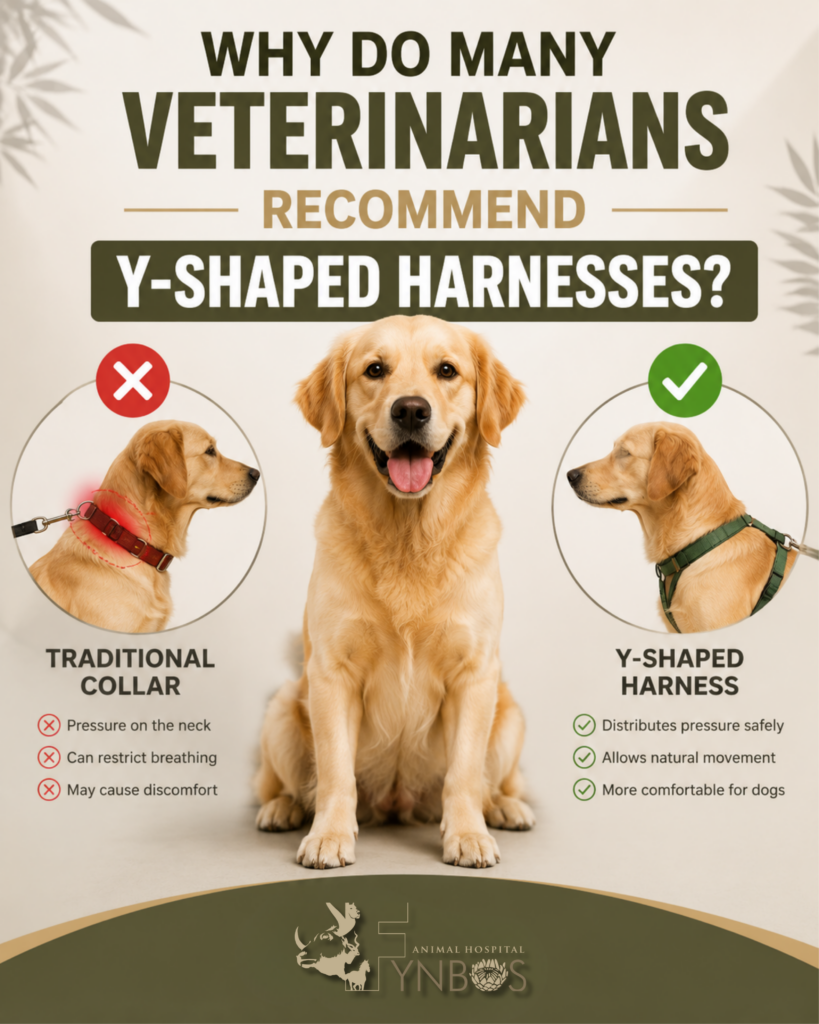
Choosing the right harness for your dog can feel overwhelming. With so many styles available, from H-shaped harnesses to front-clip and no-pull designs, it can be difficult to know which option is best.
One style that is often recommended by veterinarians and canine health professionals is the 𝐘-𝐬𝐡𝐚𝐩𝐞𝐝 𝐝𝐨𝐠 𝐡𝐚𝐫𝐧𝐞𝐬𝐬.
But why?
The answer lies in how the harness supports your dog’s body and allows natural movement while providing comfort and control.
𝐖𝐇𝐀𝐓 𝐈𝐒 𝐀 𝐘-𝐒𝐇𝐀𝐏𝐄𝐃 𝐃𝐎𝐆 𝐇𝐀𝐑𝐍𝐄𝐒𝐒?
A Y-shaped harness features a strap that runs down the centre of the chest and between the front legs, forming a “Y” shape across the front of the dog’s body.
This design helps keep pressure away from the neck while allowing the shoulders and front legs to move naturally.
Unlike some harnesses that run straight across the shoulders, a Y-shaped harness is designed to reduce restriction and support a more natural gait.
𝐖𝐇𝐘 𝐈𝐒 𝐒𝐇𝐎𝐔𝐋𝐃𝐄𝐑 𝐌𝐎𝐕𝐄𝐌𝐄𝐍𝐓 𝐈𝐌𝐏𝐎𝐑𝐓𝐀𝐍𝐓?
A dog’s front limbs and shoulders play a major role in movement.
When a harness restricts the shoulders, it may:
Shorten a dog’s stride
Alter natural movement patterns
Create unnecessary pressure on joints and muscles
Lead to discomfort over time
Affect performance in active dogs
This is particularly important for:
Active dogs
Sporting and working dogs
Growing puppies
Senior dogs
Dogs with mobility concerns
𝐘-𝐒𝐇𝐀𝐏𝐄𝐃 𝐕𝐒 𝐇-𝐒𝐇𝐀𝐏𝐄𝐃 𝐇𝐀𝐑𝐍𝐄𝐒𝐒: 𝐖𝐇𝐀𝐓’𝐒 𝐓𝐇𝐄 𝐃𝐈𝐅𝐅𝐄𝐑𝐄𝐍𝐂𝐄?
Many dog owners ask whether a Y-shaped harness is better than an H-shaped harness.
The truth is that both styles can work well when fitted correctly.
The most important factors are that the harness:
Does not put pressure on the throat
Allows free shoulder movement
Fits comfortably without rubbing
Is adjusted correctly for the dog’s body shape
A poorly fitted harness of any type can cause discomfort and reduce mobility.
𝟓 𝐒𝐈𝐆𝐍𝐒 𝐘𝐎𝐔𝐑 𝐃𝐎𝐆’𝐒 𝐇𝐀𝐑𝐍𝐄𝐒𝐒 𝐃𝐎𝐄𝐒𝐍’𝐓 𝐅𝐈𝐓 𝐏𝐑𝐎𝐏𝐄𝐑𝐋𝐘
If you notice any of these signs, it may be time to reassess your dog’s harness.
𝟏. 𝐘𝐨𝐮𝐫 𝐃𝐨𝐠 𝐀𝐯𝐨𝐢𝐝𝐬 𝐖𝐞𝐚𝐫𝐢𝐧𝐠 𝐈𝐭
If your dog backs away when the harness comes out, it may be uncomfortable.
𝟐. 𝐑𝐞𝐝 𝐌𝐚𝐫𝐤𝐬 𝐨𝐫 𝐇𝐚𝐢𝐫 𝐋𝐨𝐬𝐬
Rubbing and pressure points often indicate a poor fit.
𝟑. 𝐓𝐡𝐞 𝐇𝐚𝐫𝐧𝐞𝐬𝐬 𝐒𝐡𝐢𝐟𝐭𝐬 𝐃𝐮𝐫𝐢𝐧𝐠 𝐖𝐚𝐥𝐤𝐬
A harness should remain secure without excessive movement.
𝟒. 𝐘𝐨𝐮𝐫 𝐃𝐨𝐠’𝐬 𝐌𝐨𝐯𝐞𝐦𝐞𝐧𝐭 𝐋𝐨𝐨𝐤𝐬 𝐑𝐞𝐬𝐭𝐫𝐢𝐜𝐭𝐞𝐝
Shorter strides or stiffness can suggest that the harness is limiting movement.
𝟓. 𝐓𝐡𝐞 𝐇𝐚𝐫𝐧𝐞𝐬𝐬 𝐏𝐫𝐞𝐬𝐬𝐞𝐬 𝐀𝐠𝐚𝐢𝐧𝐬𝐭 𝐭𝐡𝐞 𝐍𝐞𝐜𝐤
This is especially noticeable when a dog pulls on the lead.
𝐖𝐇𝐈𝐂𝐇 𝐃𝐎𝐆𝐒 𝐁𝐄𝐍𝐄𝐅𝐈𝐓 𝐌𝐎𝐒𝐓 𝐅𝐑𝐎𝐌 𝐀 𝐘-𝐒𝐇𝐀𝐏𝐄𝐃 𝐇𝐀𝐑𝐍𝐄𝐒𝐒?
Y-shaped harnesses are often recommended for:
Puppies
Active dogs
Dogs that walk regularly
Sporting and working dogs
Dogs with neck concerns
Dogs that tend to pull on the lead
The design helps distribute pressure across the chest rather than concentrating it around the neck.
𝐅𝐈𝐓 𝐈𝐒 𝐌𝐎𝐑𝐄 𝐈𝐌𝐏𝐎𝐑𝐓𝐀𝐍𝐓 𝐓𝐇𝐀𝐍 𝐓𝐇𝐄 𝐁𝐑𝐀𝐍𝐃
Many owners focus on finding the “best” harness brand, but fit is far more important.
Even an expensive harness can cause problems if it:
Is too tight
Is too loose
Is adjusted incorrectly
Does not suit the dog’s body shape
If you are unsure, speak to your veterinarian for advice on the best harness for your specific dog’s needs.
𝐓𝐇𝐄 𝐁𝐎𝐓𝐓𝐎𝐌 𝐋𝐈𝐍𝐄
The purpose of a good harness is not only to provide control but also to support your dog’s comfort, safety, and natural movement.
This is one of the reasons why many veterinarians recommend Y-shaped harnesses. Their design allows greater freedom of movement while helping to reduce unnecessary pressure on sensitive areas.
Every dog is different, however, and the best harness is always one that fits correctly and allows your dog to move comfortably.
Not sure if your dog’s harness is the right fit?
Our team is here to help with professional advice on your pet’s comfort, mobility, and overall wellbeing.
𝐂𝐨𝐧𝐭𝐚𝐜𝐭 𝐅𝐲𝐧𝐛𝐨𝐬 𝐀𝐧𝐢𝐦𝐚𝐥 𝐇𝐨𝐬𝐩𝐢𝐭𝐚𝐥 𝐭𝐨𝐝𝐚𝐲 𝐟𝐨𝐫 𝐞𝐱𝐩𝐞𝐫𝐭 𝐠𝐮𝐢𝐝𝐚𝐧𝐜𝐞 𝐨𝐧 𝐜𝐡𝐨𝐨𝐬𝐢𝐧𝐠 𝐭𝐡𝐞 𝐫𝐢𝐠𝐡𝐭 𝐡𝐚𝐫𝐧𝐞𝐬𝐬 𝐟𝐨𝐫 𝐲𝐨𝐮𝐫 𝐝𝐨𝐠.