
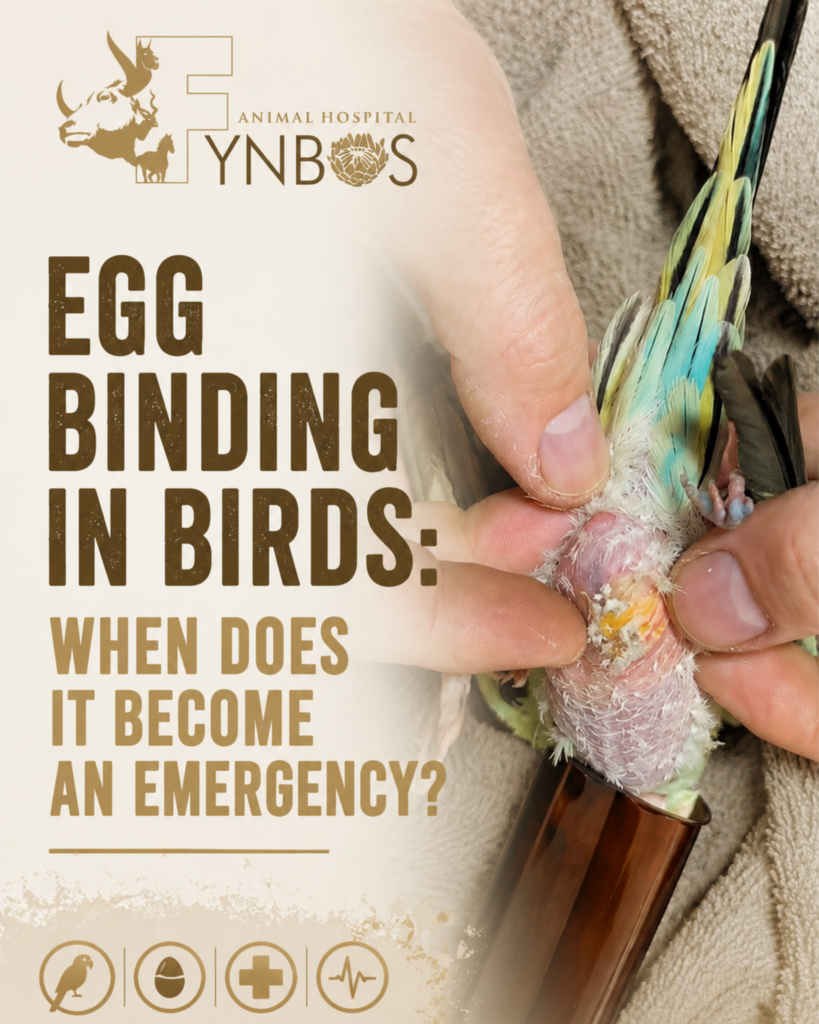
Egg binding in birds is one of the most common reproductive emergencies seen in pet birds. It occurs when a female bird is unable to pass an egg normally and the egg becomes lodged within the reproductive tract.
In a recent video, Dr Ivan discussed the causes, risks and prevention of egg binding. In this article, we focus on what happens once a bird becomes egg bound and the treatment options available.
Many bird owners do not realise how quickly this condition can become life-threatening. As the egg remains trapped, pressure builds within the body, affecting normal organ function and placing significant stress on the bird.
Without prompt treatment, serious complications can develop.
𝐒𝐢𝐠𝐧𝐬 𝐓𝐡𝐚𝐭 𝐘𝐨𝐮𝐫 𝐁𝐢𝐫𝐝 𝐍𝐞𝐞𝐝𝐬 𝐈𝐦𝐦𝐞𝐝𝐢𝐚𝐭𝐞 𝐕𝐞𝐭𝐞𝐫𝐢𝐧𝐚𝐫𝐲 𝐀𝐭𝐭𝐞𝐧𝐭𝐢𝐨𝐧
Birds are experts at hiding illness. By the time symptoms become obvious, the condition is often already advanced.
Common bird egg binding symptoms include:
- Straining to lay an egg
- Swollen or enlarged abdomen
- Fluffed-up feathers
- Lethargy
- Reduced appetite
- Difficulty breathing
- Sitting at the bottom of the cage
- Weakness
- Reduced activity levels
If your bird shows any of these signs, immediate veterinary attention is recommended.
𝐇𝐨𝐰 𝐄𝐠𝐠 𝐁𝐢𝐧𝐝𝐢𝐧𝐠 𝐈𝐬 𝐃𝐢𝐚𝐠𝐧𝐨𝐬𝐞𝐝
When a bird arrives at the veterinary practice, the first priority is assessing its overall condition.
𝐂𝐥𝐢𝐧𝐢𝐜𝐚𝐥 𝐄𝐱𝐚𝐦𝐢𝐧𝐚𝐭𝐢𝐨𝐧
Your veterinarian will evaluate:
- Body condition
- Hydration status
- Breathing
- Behaviour
- Abdominal enlargement
𝐃𝐢𝐚𝐠𝐧𝐨𝐬𝐭𝐢𝐜 𝐓𝐞𝐬𝐭𝐢𝐧𝐠
Depending on the case, further investigations may include:
- X-rays
- Ultrasound examination
- Physical examination
- Blood tests when necessary
These diagnostic tools help determine the position, size and condition of the egg.
𝐓𝐫𝐞𝐚𝐭𝐦𝐞𝐧𝐭 𝐟𝐨𝐫 𝐄𝐠𝐠 𝐁𝐢𝐧𝐝𝐢𝐧𝐠 𝐢𝐧 𝐁𝐢𝐫𝐝𝐬
The treatment of egg binding depends on several factors, including the bird’s condition, the size of the egg and how long the problem has been present.
- 𝐒𝐭𝐚𝐛𝐢𝐥𝐢𝐬𝐚𝐭𝐢𝐨𝐧 𝐨𝐟 𝐭𝐡𝐞 𝐁𝐢𝐫𝐝
Before further treatment begins, the bird must often be stabilised.
This may include:
- Heat support
- Fluid therapy
- Oxygen support if required
- Stress reduction
Many birds arrive weak, exhausted and dehydrated.
- 𝐂𝐚𝐥𝐜𝐢𝐮𝐦 𝐒𝐮𝐩𝐩𝐥𝐞𝐦𝐞𝐧𝐭𝐚𝐭𝐢𝐨𝐧
Calcium plays a vital role in muscle contraction and normal egg laying.
When calcium levels are low, the reproductive tract may not contract effectively enough to pass the egg.
Calcium supplementation is often an important part of treatment.
- 𝐏𝐚𝐢𝐧 𝐌𝐚𝐧𝐚𝐠𝐞𝐦𝐞𝐧𝐭
Egg binding can be painful and stressful for birds.
Appropriate pain management improves comfort and helps reduce physical strain on the body.
- 𝐌𝐞𝐝𝐢𝐜𝐚𝐥 𝐒𝐮𝐩𝐩𝐨𝐫𝐭
Some cases respond to supportive medical treatment designed to assist the bird in passing the egg naturally.
This approach is only used when deemed safe and appropriate by the veterinarian.
- 𝐕𝐞𝐭𝐞𝐫𝐢𝐧𝐚𝐫𝐲 𝐑𝐞𝐦𝐨𝐯𝐚𝐥 𝐨𝐟 𝐭𝐡𝐞 𝐄𝐠𝐠
If the egg cannot be passed naturally, additional procedures may be required to remove it safely.
The chosen approach depends on:
- The position of the egg
- Egg size
- The bird’s overall condition
- Potential risks and complications
These procedures should only be performed by a qualified veterinarian.
𝐖𝐡𝐚𝐭 𝐘𝐨𝐮 𝐒𝐡𝐨𝐮𝐥𝐝 𝐍𝐨𝐭 𝐃𝐨
When owners suspect egg binding, there is often a temptation to try home remedies.
Unfortunately, this can cause severe injury.
Do not:
- Apply pressure to the abdomen
- Attempt to massage the egg out
- Administer medication without veterinary advice
- Wait several days to see if the problem resolves on its own
Every delay increases the risk of complications.
𝐂𝐚𝐧 𝐁𝐢𝐫𝐝𝐬 𝐑𝐞𝐜𝐨𝐯𝐞𝐫 𝐅𝐫𝐨𝐦 𝐄𝐠𝐠 𝐁𝐢𝐧𝐝𝐢𝐧𝐠?
Yes.
Many birds make a full recovery when treatment is provided early.
The key factors are recognising symptoms quickly and seeking professional veterinary care without delay.
When treatment is postponed, the risk of:
- Internal injuries
- Infection
- Organ damage
- Death
increases significantly.
𝐏𝐫𝐞𝐯𝐞𝐧𝐭𝐢𝐧𝐠 𝐅𝐮𝐭𝐮𝐫𝐞 𝐂𝐚𝐬𝐞𝐬
Even after successful treatment, prevention remains important.
Speak to your veterinarian about:
- Balanced nutrition
- Calcium supplementation where necessary
- Breeding management
- Weight control
- Routine health examinations
These measures help reduce the likelihood of future egg binding episodes.
𝐖𝐡𝐲 𝐄𝐚𝐫𝐥𝐲 𝐓𝐫𝐞𝐚𝐭𝐦𝐞𝐧𝐭 𝐌𝐚𝐭𝐭𝐞𝐫𝐬
Egg binding is not a condition that should be monitored at home while waiting for improvement.
Prompt veterinary care often makes the difference between a straightforward recovery and a life-threatening emergency.
If you suspect your bird is egg bound, contact your veterinarian immediately.
Concerned About Your Bird?
Egg binding requires prompt veterinary attention. The earlier treatment begins, the better the chances of a successful recovery.
Contact Fynbos Animal Hospital in Worcester if you are concerned about your pet’s health. Early intervention often leads to better outcomes.
𝐂𝐨𝐧𝐜𝐞𝐫𝐧𝐞𝐝 𝐀𝐛𝐨𝐮𝐭 𝐘𝐨𝐮𝐫 𝐁𝐢𝐫𝐝?
Egg binding requires prompt veterinary attention. The earlier treatment begins, the better the chances of a successful recovery.
𝑪𝒐𝒏𝒕𝒂𝒄𝒕 𝑭𝒚𝒏𝒃𝒐𝒔 𝑨𝒏𝒊𝒎𝒂𝒍 𝑯𝒐𝒔𝒑𝒊𝒕𝒂𝒍 𝒊𝒏 𝑾𝒐𝒓𝒄𝒆𝒔𝒕𝒆𝒓 𝒊𝒇 𝒚𝒐𝒖 𝒂𝒓𝒆 𝒄𝒐𝒏𝒄𝒆𝒓𝒏𝒆𝒅 𝒂𝒃𝒐𝒖𝒕 𝒚𝒐𝒖𝒓 𝒑𝒆𝒕’𝒔 𝒉𝒆𝒂𝒍𝒕𝒉. 𝑬𝒂𝒓𝒍𝒚 𝒊𝒏𝒕𝒆𝒓𝒗𝒆𝒏𝒕𝒊𝒐𝒏 𝒐𝒇𝒕𝒆𝒏 𝒍𝒆𝒂𝒅𝒔 𝒕𝒐 𝒃𝒆𝒕𝒕𝒆𝒓 𝒐𝒖𝒕𝒄𝒐𝒎𝒆𝒔.