
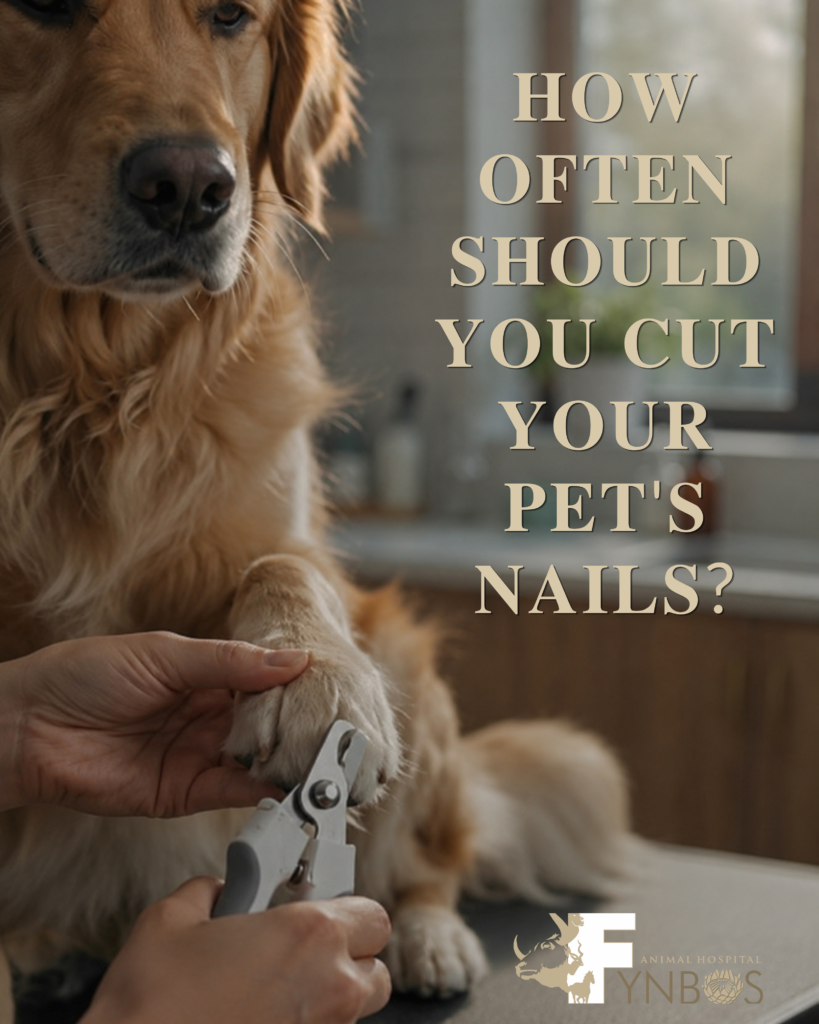
Most pet owners know that nail trimming is important. What many do not know is that overgrown nails can affect far more than just appearance.
In fact, one of the most common questions veterinarians receive is:
𝑯𝑶𝑾 𝑶𝑭𝑻𝑬𝑵 𝑺𝑯𝑶𝑼𝑳𝑫 𝒀𝑶𝑼 𝑪𝑼𝑻 𝒀𝑶𝑼𝑹 𝑷𝑬𝑻’𝑺 𝑵𝑨𝑰𝑳𝑺?
The answer is simpler than you may think.
𝐀 𝐒𝐈𝐌𝐏𝐋𝐄 𝐓𝐄𝐒𝐓
When your dog or cat is standing normally on a hard surface, their nails should not constantly touch the ground.
If you hear clicking sounds when your dog walks across a tiled floor, it may be a sign that the nails have become too long.
Long nails change the way a pet places weight on its feet. Over time, this can place unnecessary strain on joints, muscles and tendons.
𝐖𝐇𝐘 𝐋𝐎𝐍𝐆 𝐍𝐀𝐈𝐋𝐒 𝐂𝐀𝐍 𝐁𝐄 𝐀 𝐏𝐑𝐎𝐁𝐋𝐄𝐌
Overgrown nails can lead to:
🐾 Discomfort when walking
🐾 Changes in posture
🐾 Reduced traction on smooth surfaces
🐾 Increased risk of nail breakages
🐾 Additional pressure on joints and ligaments
For older pets or animals already dealing with arthritis, proper nail care can play an important role in maintaining comfort and mobility.
𝐇𝐎𝐖 𝐎𝐅𝐓𝐄𝐍 𝐒𝐇𝐎𝐔𝐋𝐃 𝐍𝐀𝐈𝐋𝐒 𝐁𝐄 𝐓𝐑𝐈𝐌𝐌𝐄𝐃?
There is no single answer for every pet.
Factors such as age, activity levels, breed and the surfaces they walk on all play a role.
As a general guideline:
Active dogs that spend time on hard surfaces may naturally wear their nails down.
Indoor pets often require more frequent trimming.
Most pets benefit from a nail check every 4 to 6 weeks.
The key is regular monitoring rather than waiting until the nails become noticeably long.
𝐓𝐇𝐄 𝐁𝐈𝐆𝐆𝐄𝐒𝐓 𝐅𝐄𝐀𝐑: 𝐂𝐔𝐓𝐓𝐈𝐍𝐆 𝐓𝐎𝐎 𝐒𝐇𝐎𝐑𝐓
One of the main reasons owners avoid trimming nails is the fear of cutting into the quick.
The quick is the sensitive part inside the nail that contains blood vessels and nerves.
Cutting into this area can cause pain and bleeding.
If you are unsure where to cut, it is always safer to seek professional assistance rather than risk injury.
𝐒𝐇𝐎𝐔𝐋𝐃 𝐘𝐎𝐔 𝐓𝐑𝐈𝐌 𝐘𝐎𝐔𝐑 𝐏𝐄𝐓’𝐒 𝐍𝐀𝐈𝐋𝐒 𝐀𝐓 𝐇𝐎𝐌𝐄?
Many owners successfully trim their pets’ nails at home.
However, some pets become anxious, fearful or resistant during the process.
If your pet becomes stressed, forcing the procedure can create negative associations and make future trimming more difficult.
In these cases, a quick visit to your veterinarian can make the experience safer and less stressful for everyone involved.
𝐇𝐄𝐀𝐋𝐓𝐇𝐘 𝐍𝐀𝐈𝐋𝐒. 𝐇𝐀𝐏𝐏𝐘 𝐏𝐄𝐓𝐒.
Nail trimming may seem like a small part of pet care, but it has a significant impact on your pet’s comfort, movement and overall wellbeing.
Regular nail checks can help prevent discomfort before it becomes a problem and keep your pet moving comfortably for years to come.
𝑯𝑬𝑨𝑳𝑻𝑯𝒀 𝑵𝑨𝑰𝑳𝑺. 𝑯𝑨𝑷𝑷𝒀 𝑷𝑬𝑻𝑺.
The team at Fynbos Animal Hospital is always happy to assist with professional nail trimming and advice tailored to your pet.