
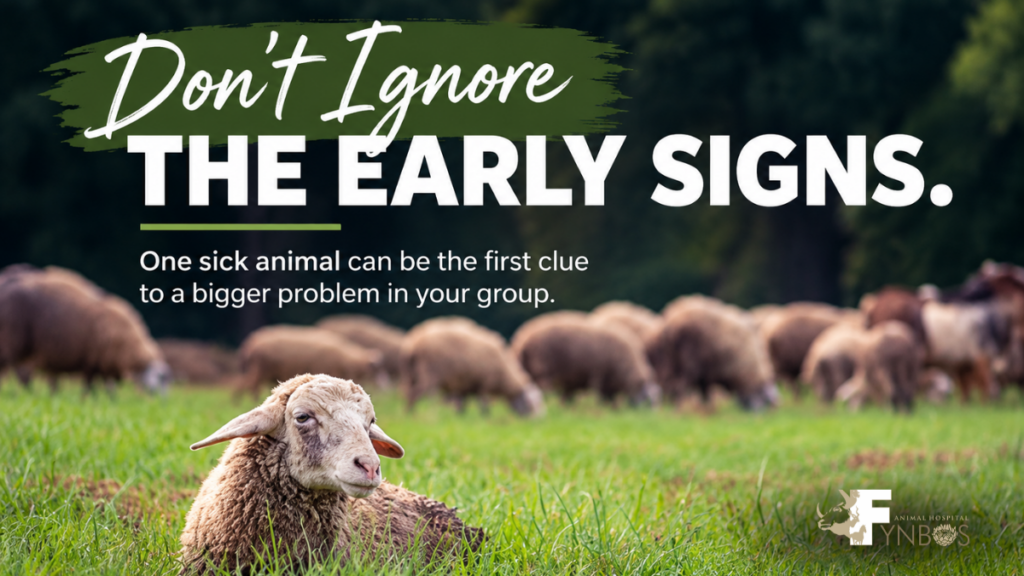
One sick animal does not always mean you have a herd or flock problem.
But it should make you look closer.
When a cow, sheep or other production animal suddenly stops eating, separates from the group, coughs, moves differently or simply looks “off”, the most important question is not only, “What is wrong with this animal?”
You should also ask:
What is happening in the rest of the group?
Veterinary herd-health guidance recommends closer observation of the entire pen, pasture or group once an individual sick animal is identified. The goal is to find other affected animals early and reduce the risk of a larger disease problem developing.
𝐎𝐍𝐄 𝐀𝐍𝐈𝐌𝐀𝐋 𝐌𝐀𝐘 𝐁𝐄 𝐓𝐇𝐄 𝐅𝐈𝐑𝐒𝐓 𝐎𝐍𝐄 𝐘𝐎𝐔 𝐍𝐎𝐓𝐈𝐂𝐄
Animals do not all show disease at the same time or in the same way.
One animal may be more susceptible because of age, stress, nutrition, immunity or another health problem. Others in the same group might already be exposed without showing obvious signs yet.
This is why the first visibly sick animal should trigger a broader check.
Walk through the group and look for:
- Animals standing apart
- Reduced appetite or animals not coming to feed
- Coughing or nasal discharge
- Faster or more difficult breathing
- Stiffness, lameness or slower movement
- Drooping ears or dull behaviour
- Changes in manure
- More animals spending unusual amounts of time at the water point
These are recognised warning signs used during cattle health surveillance.
𝐋𝐎𝐎𝐊 𝐅𝐎𝐑 𝐀 𝐏𝐀𝐓𝐓𝐄𝐑𝐍, 𝐍𝐎𝐓 𝐉𝐔𝐒𝐓 𝐀 𝐒𝐘𝐌𝐏𝐓𝐎𝐌
One coughing animal and five coughing animals tell two different stories.
The same applies when several animals suddenly eat less, develop loose manure or become quiet.
Ask:
- Did all affected animals share the same camp?
- Did they recently move?
- Was a new animal introduced?
- Did feed or water change?
- Was there recent transport, handling or another stressful event?
- Are animals of a specific age group affected?
Patterns help your veterinarian decide what needs further investigation.
For example, respiratory disease in cattle often involves more than coughing. Fever, reduced appetite, depression, nasal discharge and rapid breathing may occur together, and affected cattle often start separating themselves from the herd.
𝐅𝐄𝐄𝐃 𝐀𝐍𝐃 𝐖𝐀𝐓𝐄𝐑 𝐂𝐀𝐍 𝐆𝐈𝐕𝐄 𝐘𝐎𝐔 𝐀𝐍 𝐄𝐀𝐑𝐋𝐘 𝐖𝐀𝐑𝐍𝐈𝐍𝐆
Do not only watch the animals.
Watch what the group is consuming.
Changes in feed intake, water consumption and production levels are useful early indicators when disease may be developing in a group.
A sudden change across several animals deserves attention even when no single animal looks severely ill yet.
𝐈𝐒𝐎𝐋𝐀𝐓𝐈𝐎𝐍 𝐂𝐀𝐍 𝐏𝐑𝐎𝐓𝐄𝐂𝐓 𝐓𝐇𝐄 𝐑𝐄𝐒𝐓 𝐎𝐅 𝐓𝐇𝐄 𝐆𝐑𝐎𝐔𝐏
When infectious disease is suspected, separating affected animals from healthy animals forms an important part of biosecurity.
Good outbreak management also includes limiting unnecessary movement between affected and unaffected groups, using clean equipment and handling sick animals after healthy animals where practical.
Do not start treating several animals simply because one has become sick. Different diseases produce similar signs, and treatment should follow a proper assessment and diagnosis.
𝐍𝐄𝐖 𝐀𝐍𝐈𝐌𝐀𝐋𝐒 𝐃𝐄𝐒𝐄𝐑𝐕𝐄 𝐄𝐗𝐓𝐑𝐀 𝐀𝐓𝐓𝐄𝐍𝐓𝐈𝐎𝐍
If illness appears after animals have recently been introduced, review the whole group carefully.
Introducing new animals is a recognised biosecurity risk because apparently healthy animals can carry infectious agents into a herd or flock. Isolation, observation and good records form part of responsible herd-health planning.
Keep track of:
- Where new animals came from
- When they arrived
- Vaccination and treatment history
- Which groups they joined
- When the first signs appeared
This information gives your veterinarian valuable context.
𝐎𝐍𝐄 𝐒𝐈𝐂𝐊 𝐀𝐍𝐈𝐌𝐀𝐋 𝐈𝐒 𝐍𝐎𝐓 𝐀𝐋𝐖𝐀𝐘𝐒 𝐉𝐔𝐒𝐓 𝐎𝐍𝐄 𝐒𝐈𝐂𝐊 𝐀𝐍𝐈𝐌𝐀𝐋
The first animal you notice might be an isolated case.
Or it might be the first visible sign of a problem affecting more animals.
That is why good herd and flock management depends on observation, records and recognising patterns early.
When one animal looks different, examine the animal.
Then look at the group.
If several animals begin showing similar changes, feed or water consumption drops, or the condition of the first animal deteriorates, contact your veterinarian early.
At Fynbos Animal Hospital, our production-animal team supports farmers with on-farm assessments, herd-health work and veterinary call-outs.
If something changes in your herd or flock, contact Fynbos Animal Hospital before a small concern develops into a bigger problem.