
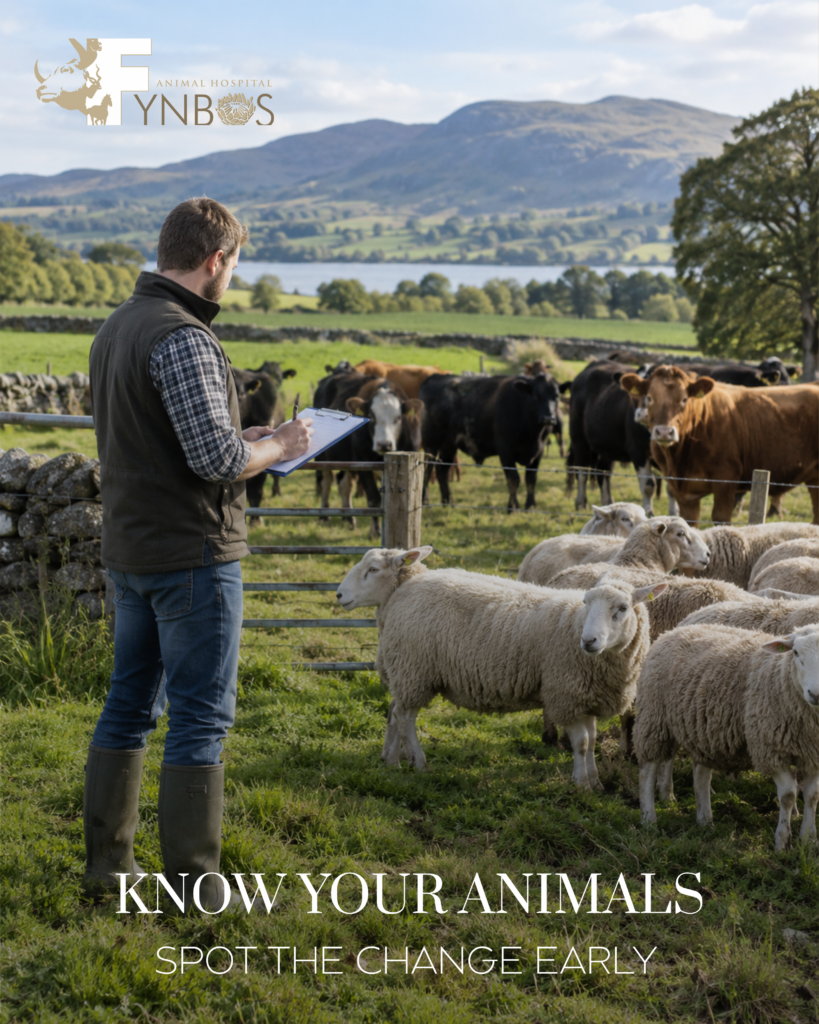
In sheep and cattle, illness often starts with small changes.
An animal stands away from the group. A ewe stops coming to feed. A cow walks more slowly. Breathing looks different. Manure changes.
These signs are easy to miss during a busy day, but daily observation often gives you the first warning before a health problem becomes more serious. Veterinary guidance for both cattle and sheep highlights changes in appetite, behaviour, movement, breathing and manure as useful early indicators of illness.
𝑩𝒆𝒉𝒂𝒗𝒊𝒐𝒖𝒓: Watch the animal that does something different
One of the most useful warning signs is a change from normal behaviour.
Pay attention when an animal:
- Separates from the herd or flock
- Becomes unusually quiet
- Lags behind
- Lies down more than normal
- Stops interacting with other animals
- Looks dull or less alert
Sheep that isolate themselves, lose condition, limp or show unusual behaviour should receive closer assessment. Sick cattle also often become listless or separate from herd mates.
A practical tip: do not only look for a “sick animal”. Look for an animal behaving differently from yesterday.
𝑨𝒑𝒑𝒆𝒕𝒊𝒕𝒆: Feed intake often changes early
Reduced appetite deserves attention.
Look for animals that:
- Do not approach feed with the group
- Eat more slowly
- Stop chewing cud normally
- Spend less time grazing
- Drink much more or less than expected
A drop in feed intake often appears alongside other early signs of disease. During outbreaks, changes in feed and water consumption also help identify problems developing across a group.
For lactating cattle, an unexplained drop in milk production alongside appetite or behaviour changes also deserves investigation.
𝑴𝒐𝒗𝒆𝒎𝒆𝒏𝒕: Watch them walk before you handle them
An animal’s movement tells you a lot.
Look for:
- Shortened steps
- Stiffness
- Limping
- Reluctance to stand
- Uneven weight bearing
- Falling behind when the group moves
- An arched back or unusual posture
Lameness is not always a simple hoof problem. Pain, injury, joint disease and systemic illness all affect movement. Cattle with lameness often change their stride, posture, feeding behaviour and time spent standing or lying down.
Watch animals moving naturally before chasing or restraining them. Subtle gait changes are easier to see then.
𝑩𝒓𝒆𝒂𝒕𝒉𝒊𝒏𝒈: Never ignore a change in effort
Breathing should look quiet and effortless at rest.
Watch for:
- Faster breathing
- Shallow breathing
- Coughing
- Nasal discharge
- Flared nostrils
- Head and neck stretched forward
- Open-mouth breathing
- Reluctance to move
Increased respiratory rate, coughing and nasal discharge are recognised warning signs in cattle. Stress, transport, poor ventilation, dust and mixing unfamiliar groups also increase respiratory disease risk.
Laboured breathing needs prompt veterinary attention, especially when several animals show similar signs.
𝑫𝒊𝒈𝒆𝒔𝒕𝒊𝒐𝒏: Manure tells part of the story
Do not overlook what is happening behind the animal.
Watch for:
- Diarrhoea
- Manure becoming unusually firm
- Sudden changes in colour or consistency
- Straining
- Reduced defecation
- Abdominal swelling or abnormal fill
Loose or unusually firm faeces and abnormal abdominal fill appear among recognised signs of illness in cattle.
One abnormal dropping does not always mean disease. A repeated change, especially together with reduced appetite or dull behaviour, deserves closer attention.
The most important habit: Know what normal looks like
Early detection starts before an animal becomes visibly sick.
Spend a few minutes each day watching the group before disturbing them. Look at who is eating, who is moving normally, who is chewing cud and who stands apart.
When one animal changes, look closer. When several animals change at the same time, act faster.
Disease control guidance stresses the value of spotting deviations from normal early, followed by prompt investigation to limit spread and losses.
𝐖𝐇𝐄𝐍 𝐒𝐇𝐎𝐔𝐋𝐃 𝐘𝐎𝐔 𝐂𝐀𝐋𝐋 𝐘𝐎𝐔𝐑 𝐕𝐄𝐓𝐄𝐑𝐈𝐍𝐀𝐑𝐈𝐀𝐍?
Contact your veterinarian when an animal deteriorates quickly, struggles to breathe, cannot stand, shows severe lameness, stops eating, develops persistent diarrhoea, or when several animals begin showing similar signs.
Early veterinary assessment helps identify the cause, guide treatment and protect the rest of the herd or flock.
At Fynbos Animal Hospital, our production animal team supports farmers with practical veterinary care for sheep and cattle.
If something in your herd does not look right, do not wait for the signs to become obvious. Early action often starts with one simple observation.