
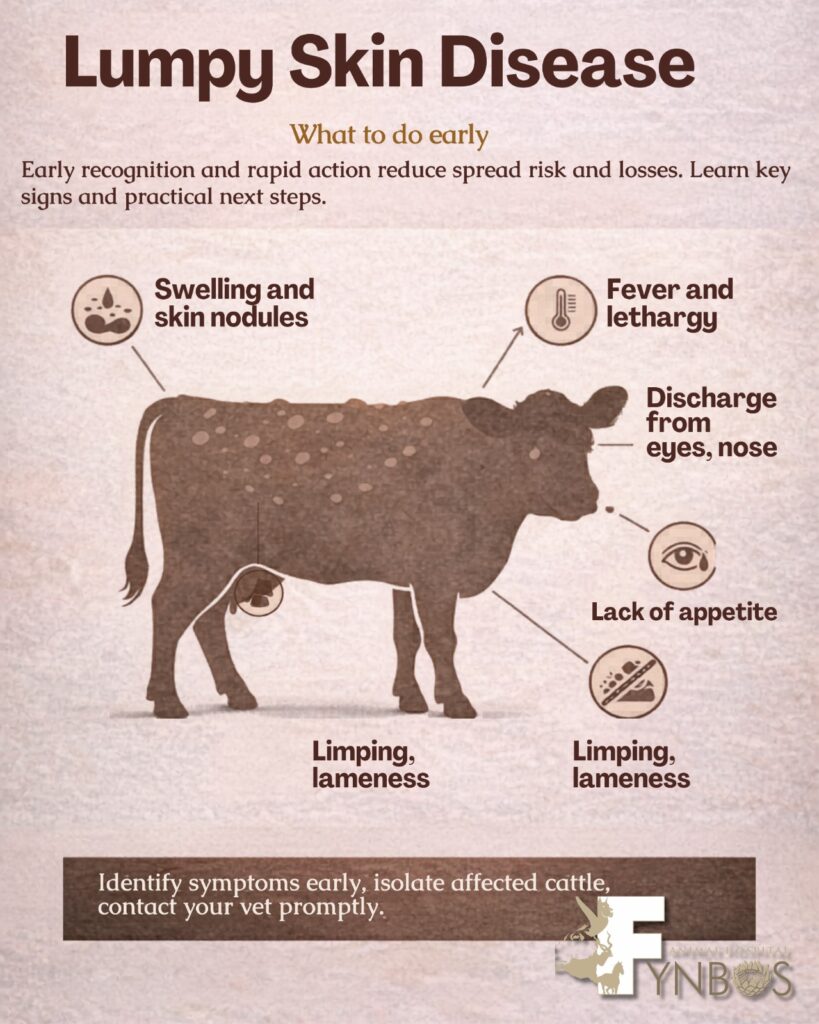
Lumpy Skin Disease affects cattle across many farming regions in Southern Africa. The virus spreads through biting insects such as mosquitoes, flies, and ticks. During warm seasons when insect activity rises, the risk of outbreaks increases. Early recognition and fast response protect herd health and reduce economic losses on farms.
Why Early Action Matters
Once the virus enters a herd, infection spreads through insect vectors moving between animals. Delays in identification allow the virus to spread further, increasing treatment costs, production losses, and recovery time.
Early management protects the herd in several ways.
- Limits spread within the herd
- Protects calves and weaker animals
- Reduces weight loss and milk production decline
- Prevents secondary infections and complications
Farmers who respond quickly often limit the outbreak to only a few animals.
Key Signs Farmers Should Watch For
Lumpy Skin Disease presents through several visible signs. Early stages often appear mild, which makes observation important.
Common signs include:
- Fever and general weakness
- Firm skin nodules across the body
- Swelling around the head, neck, or legs
- Discharge from the eyes or nose
- Reduced appetite
- Limping or reluctance to move
- Drop in milk production in dairy cattle
Skin nodules remain the most recognisable symptom. These lumps appear on the skin and can later form wounds if infection progresses.
What To Do Immediately
Rapid action reduces spread risk and protects healthy animals.
Step 1: Isolate affected cattle
Move infected animals away from the main herd. Isolation reduces insect transmission between animals.
Step 2: Contact a veterinarian
Veterinary assessment confirms diagnosis and guides treatment options.
Step 3: Manage insect control
Reduce fly and mosquito populations around the herd through approved insect control products and environmental management.
Step 4: Support animal recovery
Affected animals require supportive care. Treatment focuses on wound care, hydration, and preventing secondary infections.
Step 5: Monitor the herd daily
Observe all cattle closely for early symptoms so additional cases receive attention quickly.
Protecting Herd Health During High-Risk Seasons
Prevention remains the most effective herd protection strategy. Farm management practices reduce the likelihood of large outbreaks.
Recommended measures include:
- Routine vaccination programs where available
- Strong insect control practices
- Clean water and feeding areas
- Regular herd health inspections
- Early veterinary consultation when symptoms appear
Calving season requires special attention because young animals carry lower resistance to infection. Monitoring cows and calves closely during this period protects herd stability.
Why Veterinary Guidance Matters
Professional veterinary support helps farmers make informed decisions during disease outbreaks. Accurate diagnosis ensures the correct treatment approach and helps prevent unnecessary herd losses.
Veterinarians also guide farmers on herd prevention plans, vaccination schedules, and parasite control strategies suited to local farm conditions.